
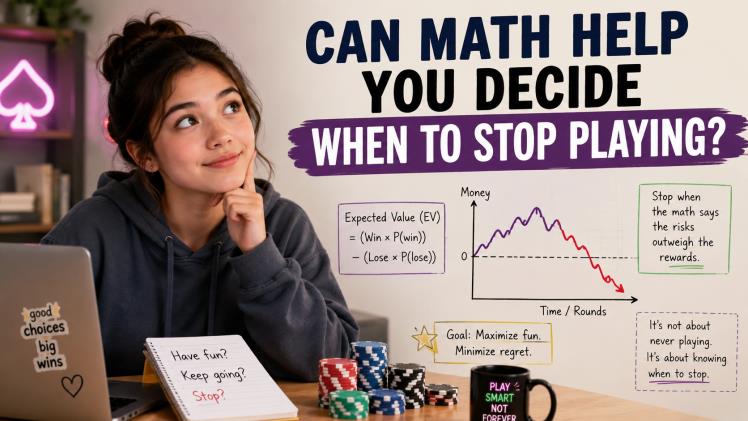
Introduction
KING 999 Games of chance have established a firm place in the dynamic realm of digital entertainment. Among these, one specific kind of spinning reels and unpredictable payouts has enthralled millions. Although the allure includes vibrant visuals and flashing lights, what truly motivates participation is the expectation of a victory and the mental conflict of whether to leave. How do you know when enough is enough? It’s a question that resonates in many different situations. Do statistical analysis, algorithms, and data assist one in knowing when to cease spinning?
Often seen as a dull academic topic, mathematics is quite important in decision-making, particularly under uncertainty and risk. This paper investigates the fundamental mathematical ideas behind digital reel-based games, their impact on results, and their ability to enable people to make more informed choices regarding time and effort invested in such platforms.
Digital Reel Mechanics And The Role Of Probability
Randomness is at the core of every digital spinning reel experience. Complex algorithms—especially one called the random number generator—determine every result. This software component guarantees that every outcome is independent of the previous one. The next spin runs on a new slate regardless of what just occurred—whether it was a win, a defeat, or a near-miss. Fundamentally, probability is the idea that past events have no statistical impact on every result.
Knowing this can help to offset the common erroneous assumption that a win is “due” following a run of losses. Often known as the “gambler’s fallacy,” this cognitive bias causes people to believe that results will “even out” over time. But in a genuinely random system, every spin has the same likelihood of generating a good outcome, irrespective of prior tries.
Expected Value: What You Are Receiving Back
Expected value is yet another mathematical concept with significant influence. This is a measure of what a player might statistically expect to gain or lose each interaction over the long run. Most digital reel-based experiences are intended to have slightly negative expected value. That implies the long-term average return will be lower than the original investment for every unit of currency spent.
For instance, if a digital game had an average return of 95%, then over 100 units played, one could anticipate getting back 95 units in the long run. The other five units show a slow loss with time. Although brief spurts of engagement can occasionally produce gains, over the long run, the principles of probability often bring results closer to the average.
Knowing when to leave depends on understanding expected value. Ignoring the long-term averages, mathematics forecasts, someone who keeps spinning believes a large victory is immediately around the corner. Rather than reason, they are giving in to passion and fantasy.
The Illusion Of Control And Loss Avoidance
Often, human psychology distorts mathematical logic. Many people think they can affect results in totally arbitrary systems. Prolonged sessions and sometimes illogical decisions follow from this false sense of control. Though every spin is random, certain players begin using “strategies” lacking any mathematical basis.
Loss aversion—the inclination to experience the agony of loss more acutely than the joy of a gain—is another psychological element math can assist in clarifying. This could cause people to keep spinning in a vain attempt to “recover” past losses. This kind of conduct is detrimental since it ignores the natural randomness and expected value of the game mechanisms.
More logical decisions come from knowing these psychological biases and counterbalancing them with quantitative knowledge. A person who understands that losses are inevitable given the statistical character of the game may be more likely to quit before more losses pile up.
Mathematically Based Stop-Loss And Win-Limit Strategies
In this regard, one useful use of mathematics is the application of stop-loss and win-limit techniques. A stop-loss defines a pre-determined moment at which the user decides to cease interacting with the game to prevent further loss. On the other hand, a win limit is a pre-defined threshold indicating when to walk away and cash out following a good result.
These mathematically guided approaches could be used. For instance, one might establish a loss limit just before the anticipated regression starts to affect the general experience unfavorably if the long-term average return is 95%. Likewise, if a good result surpasses the statistically anticipated performance, for example, winning 10% above the average return, it may indicate an ideal departure moment.
These techniques help people bring discipline into an otherwise erratic and emotionally intense setting. The idea is to pre-commit to these guidelines and follow them regardless of session results.
Grasping Variance And Volatility
Two further significant mathematical ideas pertinent here are volatility and variance. These words refer to the size and frequency of results over time. While a game with low volatility offers smaller, more frequent winnings, a game with high volatility usually offers fewer but higher payouts.
Knowing the kind of volatility can help establish reasonable expectations. Someone using a high-volatility method could have long losing streaks followed by significant returns. On the other hand, low-volatility settings could provide a more consistent experience but with lower possibility for spectacular victories.
Knowing the volatility helps people to better plan and match their expectations with reality. It also guides the choice of when to leave. For example, following a run of victories in a low-volatility environment, the probability of further consecutive victories decreases, hence logically suggesting a stop.
Mathematical Resource Time
Often ignored in conversations about games of chance is the idea of time as a limited resource. Every minute spent spinning is a minute not spent on other perhaps rewarding or useful tasks. By letting people measure their time commitment, mathematics helps to frame this dilemma.
A basic idea in economics, opportunity cost offers one approach to examine this. Engaging with a digital reel-based game for one hour raises the question of what one might have earned, accomplished, or enjoyed in that same hour. Valuing time helps to create better engagement habits and may help to re-evaluate priorities.
Furthermore, time spent on these sites might generate “sunk cost” behavior—the unwillingness to leave due to prior time spent. Another mathematically based concept that supports rational thinking is the realization that sunk costs should not affect future choices.
Long-Term Outcomes and the Law of Large Numbers
The law of big numbers holds that as the number of trials rises, the actual outcomes will converge on the expected value. From the point of view of the provider, digital games are therefore designed to produce consistent results over time. For players, this implies that the more they play, the more probable their outcomes will mirror the statistically projected averages.
When deciding whether to carry on or halt, this concept is essential. A brief session could stray from the anticipated result—occasionally even leading to a profit. However, ongoing play gradually returns the experience to its mathematically engineered average, which is usually not in the user’s interest.
So, understanding the consequences of the law of large numbers provides a reasonable basis for finishing a session sooner rather than later. Although still random, brief encounters are less likely to slip into the unavoidable regression that happens in long play.
Emotions Against Equations
The junction of mathematics and decision-making reveals a conflict between feeling and logic. Digital entertainment channels sometimes exploit emotional highs and lows. Carefully designed visuals, audio, and animations help to maintain high levels of involvement. These emotional responses might eclipse mathematical reasons.
But using arithmetic as a tool for decision making brings back objectivity. When feelings get too strong, it offers a set of guidelines and expectations to help one act. People can better control their involvement and prevent hasty choices by means of expected value calculation, knowledge of variance, and application of techniques such as stop-losses.
The aim is awareness, not to eliminate pleasure. Math doesn’t spoil the pleasure; rather, it provides a lens of clarity that might shield people from results they could later regret.
Customizing Your Mathematical Approach
People have various thresholds for risk, reward, and loss tolerance. Using mathematics to tailor your approach calls for knowledge of your own boundaries—financially, emotionally, and time-related. What can be an acceptable loss for one individual could be too much for another. Likewise, some people find great pleasure in little victories while others pursue larger prizes.
A strong mix involves making a plan that fits your particular tastes and follows mathematical ideas. The idea is to set these limits ahead of time using measurable data whether you decide to quit after a win, after a particular time, or after reaching a limit.
A personal framework helps to lower the probability of in-the-moment decisions motivated by hope or anger. It also guarantees that the encounter stays pleasant instead of taxing or monetarily damaging.
Conclusion
The answer to whether mathematics can assist you in determining when to stop is a loud yes. Mathematics provides a systematic, impartial perspective from which to assess risk, reward, and decision-making in digital reel-based experiences. By means of ideas such as expected value, probability, variation, and opportunity cost, people can make better educated decisions regarding their time and participation.
Although the temptation of the next spin can be great, it is finally math-not emotion-that provides the most clear direction on when to go. Understanding the laws that govern these digital games helps people to keep control over their experience, make more calculated choices, and guarantee that enjoyment stays at the front without sacrificing well-being or resources.
Whether your motivation is amusement, curiosity, or a fleeting thrill, let math be the compass guiding your path—helping you appreciate the trip but also knowing when to leave the ride.