
Most drivers in the United States rarely think about car insurance until they need it. For many people, it feels like just another monthly bill attached to owning a vehicle. But what would actually happen if the government suddenly removed the requirement to carry auto insurance?
At first, the idea might sound appealing. Millions of drivers would instantly save money by canceling their policies. Some people would see it as a victory for personal freedom and less government regulation. However, the long-term effects would likely be far more complicated.
The reality is that mandatory car insurance exists for a reason. Driving creates financial risks not only for the driver, but also for everyone else on the road.
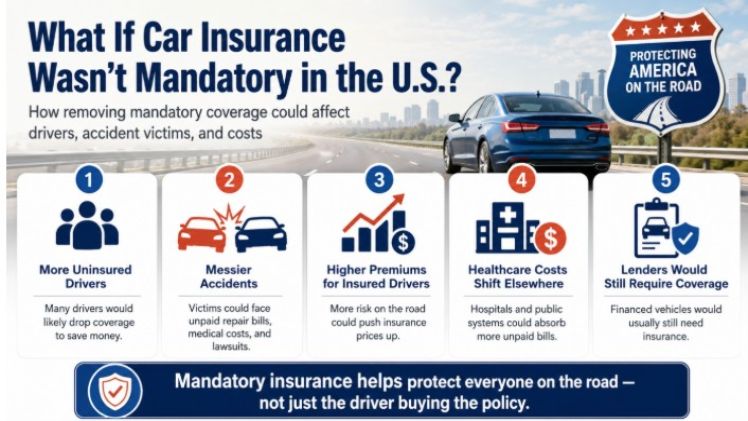
More Drivers Would Go Without Coverage
If insurance stopped being mandatory, a large number of people would likely stop paying for it immediately. This would probably include young drivers, people with lower incomes, drivers with older vehicles, and individuals trying to reduce monthly expenses.
For drivers who already struggle with premiums, learning how to compare providers and understand basic coverage can make a major difference. A guide about affordable auto insurance options can help consumers think more carefully about affordability before dropping coverage entirely.
Even today, some states already struggle with uninsured motorists despite insurance laws. Without mandatory requirements, those numbers could rise dramatically. While some drivers might continue carrying full coverage for protection and peace of mind, many others would decide the risk is worth taking.
Accidents Would Become Financially Messy
One of the biggest reasons mandatory insurance exists is to simplify what happens after an accident. Currently, insurance companies usually help handle vehicle repairs, medical costs, liability claims, and legal negotiations.
Without mandatory insurance, many accidents could turn into personal financial disasters. Imagine someone crashes into another vehicle and causes thousands of dollars in damage but has no insurance and very little money. The victim might win a lawsuit in court, but collecting the money could take years or never happen at all.
This could lead to more lawsuits, more unpaid damages, more financial stress for accident victims, and more court cases related to traffic collisions.
Insurance Prices Could Actually Increase
Ironically, removing mandatory insurance might make policies more expensive for responsible drivers who continue buying coverage.
Insurance companies calculate prices based on risk. If more uninsured drivers are on the road, insurers face higher uncertainty and greater financial exposure. As a result, uninsured motorist coverage would become more important, fraud investigations might increase, and premiums could rise in many states.
Drivers who keep coverage could end up paying even more to protect themselves from people who chose not to carry insurance.
Hospitals and Healthcare Systems Would Feel the Impact
Car accidents often involve medical treatment, emergency services, rehabilitation, and long-term care. Today, insurance frequently helps cover those expenses. Without widespread coverage, hospitals would likely face larger unpaid medical bills.
That financial burden could eventually affect healthcare costs, medical insurance premiums, emergency room systems, and public healthcare programs. In other words, the costs would not disappear. They would simply move elsewhere in the system.
Car Loans Would Still Require Insurance
Even if the law no longer required auto insurance, many drivers would still need it because of financing agreements. Banks and lenders usually require collision and comprehensive coverage to protect the vehicle while the loan is active.
As a result, drivers financing newer cars would probably still maintain insurance policies, while uninsured driving would become more common among owners of older or fully paid-off vehicles.
Some People Would Support the Change
Not everyone would see the removal of mandatory insurance as negative. Supporters might argue that drivers should have more personal freedom, government regulations should be reduced, and people should be allowed to choose their own level of financial risk.
For individuals who rarely drive or own inexpensive vehicles, canceling insurance could save hundreds or even thousands of dollars each year. Some people would likely prefer taking personal responsibility rather than paying ongoing premiums.
Alternative Systems Would Probably Appear
Even if traditional insurance laws disappeared, states would likely create replacement systems to protect the public. These could include security deposits, proof of financial responsibility, liability bonds, or state-managed compensation funds.
The reason is simple: accidents can create enormous financial damage, and governments generally want to make sure victims have some path toward compensation.
The Bigger Picture
Mandatory car insurance is not only about protecting the driver purchasing the policy. It is largely designed to protect everyone sharing the road.
Without mandatory coverage, more drivers would take financial risks, accident victims could struggle to recover losses, legal disputes would likely increase, and healthcare systems could absorb more unpaid costs.
Although removing the requirement might initially sound attractive to some drivers, the broader economic and social consequences could be significant.
In the end, mandatory insurance exists because driving is not just a personal activity. Every vehicle on the road has the potential to affect other people’s safety and financial wellbeing.